
Exploring https://www.surf1020.com/ is less about opening the biggest possible lobby and more about understanding how its categories help you choose. Dragonia presents slots, instant games, table titles, live dealer rooms, jackpots and game shows in one casino area, with filters designed to narrow the selection. For New Zealand adults, a sensible approach is to compare the format, pace, features and rules of each category before deciding whether a particular title suits the way you want to play.
Start with the game format, not the title
A casino lobby can feel overwhelming when hundreds of individual titles appear together. The quickest way to make it manageable is to begin with the broad format. Slots are generally the largest category and include traditional reels, feature-heavy video slots and titles built around jackpots. Instant games tend to be simpler and faster, while table games recreate familiar casino formats such as roulette, blackjack and baccarat.
Live casino occupies a different middle ground. It combines a streamed dealer with a digital interface, so the experience is more social and paced than a standard slot but still takes place online. Game-show formats add bonus rounds and presentation elements, while poker and dice provide different styles of decision-making and chance. Separating these formats first helps you avoid choosing a game solely because its artwork or name catches your attention.
Once the format is clear, look at the lobby’s sorting tools. The available collections include new, popular, exclusive and feature-based groupings, while provider filters can show games from a particular studio. These labels are useful for discovery, but they are not recommendations or evidence that one title is more likely to produce a favourable result. They simply reduce the number of games you need to inspect before reading the individual rules.
How do slots and instant games differ?
Slots are usually built around repeated spins, symbols and one or more bonus features. Some have straightforward paylines and compact rounds; others use expanding grids, multipliers, cascading symbols or several bonus stages. Examples listed in the casino lobby include Gates of Olympus 1000, Big Bass Splash, Sugar Rush 1000 and Wild Hot 40. These examples show the range of themes and mechanics, but a familiar title does not guarantee a particular outcome.

Instant games are often more stripped back. A round may involve selecting a result, revealing symbols or managing a simple multiplier, with less emphasis on a long feature sequence. That can appeal to someone who wants a short, easy-to-understand format. It can also encourage rapid play, so the shorter round length should be treated as a reason to set a time or spending boundary, not as a reason to increase the number of bets.
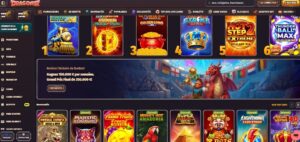
Before choosing either category, open the information panel and check the paytable, qualifying combinations, bonus rules and any displayed return information. If demo play is offered, it can help you learn the controls and understand the order of a feature. It cannot prove how a game will perform with real money, establish a future result or remove the normal uncertainty of gambling. Treat it as a familiarisation tool only.
What makes live tables and game shows a separate choice?
Live dealer games deserve a separate comparison because their rhythm is different from automated casino titles. The lobby lists roulette, blackjack, baccarat, dice and international tables, alongside game-show-style options. A live table may have scheduled rounds, a visible dealer and a more structured interface. That can make the activity feel closer to a physical casino, although the underlying result remains uncertain.
Rules matter particularly in blackjack and baccarat. Check the available betting positions, whether side bets are offered, how ties are handled and which actions are available to the player. In roulette, identify the wheel or variant and read the payout information before choosing an outside or inside bet. In a game show, inspect the bonus-round conditions rather than assuming the presentation changes the mathematical terms.
Live play may also require more attention than a slot. A round can move on a timetable, and missed decisions may not be recoverable. Consider whether you prefer a slower, observable format or the ability to pause between automated rounds. The best category is therefore a matter of fit: some players value atmosphere and routine, while others prefer quiet games with no dealer, camera or scheduled table.
Use providers, collections and demos as filters
Provider names can be useful when you already know the design style or mechanics you prefer. The directory includes studios such as Pragmatic Play, Playtech, Hacksaw Gaming, Spinomenal, Amusnet, Novomatic, Playson, Microgaming, BGaming, Yggdrasil, Betsoft, Habanero, Evoplay, Quickspin, Thunderkick, Stakelogic, Amatic, EGT Digital, Red Rake and Play’n GO. Game counts and availability can change, so a provider filter should be viewed as a search aid rather than a promise that every listed title will appear.
Collections offer another route through the lobby. A “new” group may help you discover recent additions, a “popular” group may show commonly selected titles, and a feature filter may identify jackpots, free spins or other mechanics. None of these labels should be confused with a forecast of winning. Read the game’s own rules, confirm that it is available in your location and check any provider-specific restrictions before relying on the information displayed in a category.
New Zealand players can also consult official gambling information from the Department of Internal Affairs for broader public guidance. That resource does not assess individual games or confirm the terms of a particular operator. Its value is context: game discovery should remain a leisure decision, with an amount and amount of time chosen in advance. If a demo is available, use it to learn navigation and features, then reassess whether the real-money version still fits your limits.
Build a short list before choosing a game
A short list is more useful than scrolling indefinitely. Select perhaps three titles from different formats, then compare them using the same questions: What is the basic objective? How fast is a round? Which features create additional decisions? Are the rules easy to find? Does the game require a particular stake range? This process keeps the decision based on practical details rather than bright graphics, prominent placement or a temporary feeling of excitement.
Next, check the limits and conditions shown for the specific title. Availability can depend on country and software-provider restrictions, so a game visible in a general directory may not be accessible to every account. If a jackpot, tournament or promotional collection is involved, read the relevant terms separately. Do not assume that a game’s presence in a collection makes it eligible for every offer, or that a displayed feature has the same contribution under every promotion.
Finally, decide when to stop browsing. Endless comparison can become a form of play in itself, especially when new titles and changing collections continually appear. Choose one format, set a session boundary and review the result afterwards. If the game feels confusing, too fast or difficult to leave, select a simpler option or stop. The aim of a discovery process is not to find a guaranteed winner; it is to make a clear, informed choice before any stake is placed.
Questions New Zealand players often ask
Can I try every listed game in demo mode?
No. Selected titles offer demo play, but the source material does not say that every game supports it. Availability can also depend on location and provider restrictions. Where a demo exists, use it to understand controls and features only; it does not reproduce real-money outcomes or demonstrate that a game will be profitable.
Are popular or new games better choices?
Not necessarily. Popular and new labels organise the lobby and may help you discover titles, but they do not establish better odds, lower risk or higher payouts. Compare the rules, pace and features of an individual game instead. A title that suits another player’s preferences may still be a poor fit for you.
What should I do if a game is unavailable?
Check the game’s information panel and the account’s visible availability before assuming there is a technical problem. Provider and country restrictions can apply, and the lobby may change over time. If the reason is unclear, contact customer support. Do not attempt to bypass location, account or software restrictions to access a title.