Category: Compliance
-
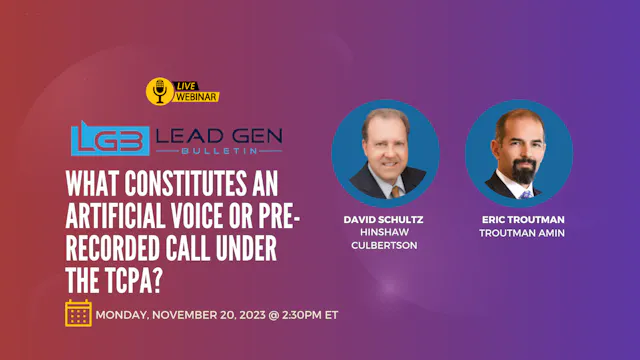
Webinar Recording: What Constitutes an Artificial Voice or Pre-Recorded Call Under the TCPA?
Understanding what constitutes an artificial or pre-recorded voice under TCPA regulations is crucial for lead generation companies. Experts David Schultz and Eric Troutman discussed recent rulings and guidelines on this topic. They explained that any use of artificial intelligence, pre-recorded messages, or other technologies that do not involve a live human voice on a call…
-

Judge Grants MTD in Class Action Against Business Lead Generator
A District Court judge in Ohio has granted a business lead generator’s motion to dismiss a class-action lawsuit after it was sued for violating state law in Ohio for using the “personas” of people in the free trial version of its software to promote its paid product without their consent. The Background: The names and…
-
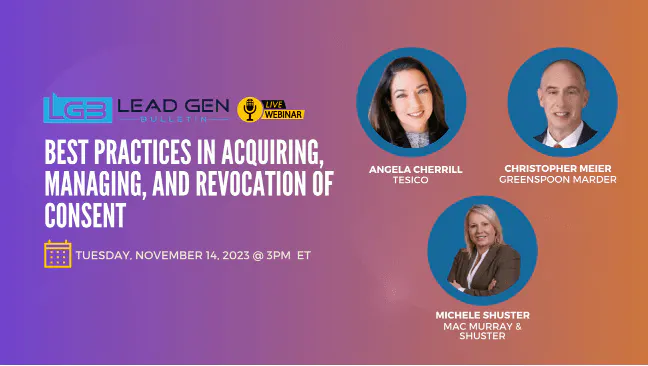
Webinar Recording: Best Practices in Acquiring, Managing, and Revocation of Consent
This panel discussion focused on best practices for acquiring, managing, and handling revocation of consumer consent in the lead generation industry. The experts discussed the different types of consent required depending on the communication channel and message. Prior express written consent under the TCPA requires identifying the seller, capturing the consumer’s phone number and electronic…
-

Human Intervention, Technology Needed to Fight Lead Fraud
The volume of fraud in the lead generation industry has grown exponentially during the past few years and is causing significant problems for buyers and sellers, panelist said during a recent LeadGenBulletin.com webinar. Companies need to use technology and increased amounts of due diligence and human intervention to stop the growth of lead fraud and…
-

Judge Denies Motion to Dismiss in TCPA Class Action
A District Court judge in Maryland has denied a defendant’s motion to dismiss a Telephone Consumer Protection Act class-action suit, ruling that the plaintiff has met the burden for stating a claim that seeks to hold the defendant vicariously liable for the acts of a third-party that made telemarketing calls on the defendant’s behalf.